Thursday, August 31, 2017

To Russia with Love... via HTTPS

Yes... we know the famous James Bond movie was titled, "From Russia with Love", however, in this case we're going to Russia.  What?  Well.... as previously noted here, the botnet owners are starting to phone home via encrypted channels.  We have a similar situation this afternoon with Russia, specifically Moscow, being the destination.  Let's follow the bouncing ball:

An M$ Word file is propagating the Internet currently that drops 27 files and launches Powershell:


Many connections are initiated outbound, mostly on TCP Port 80, but... notice the TCP:443 connection back to Mother Russia:


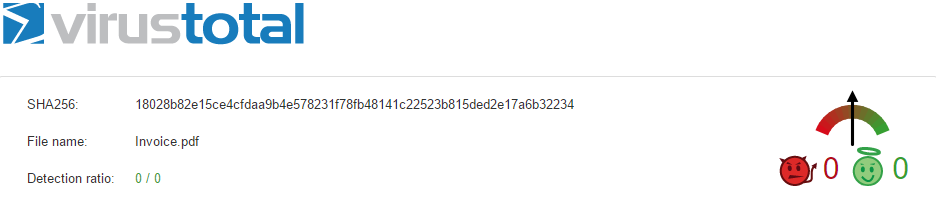
How many AV Engines are currently protecting against this threat you ask?  Not good... only 7 of 58:


Final question - are you decrypting outbound HTTPS connections?  Further, are you interrogating the outbound Posts for DLP Violations?  Call ESPO Systems if you need help... 


Monday, July 3, 2017

Phone Home via HTTPS/TCP:443

It's happening! The malware authors are transitioning from HTTP to HTTPS as the callback mechanism to their Botnets.  Per this Forcepoint Sandbox Report, you'll see that a Microsoft Word File w/bad macro is propagating today with a very low catch rate... unfortunately only 6 out of 56 Security Companies are currently detecting this as malicious:


Again, per the report above, note how the malware is phoning back home to India via TCP Port 443:


How do we know this server is Command-and-Control for a botnet... via Forcepoint's ThreatSeeker Database:


In summary, this begs a question - are you decrypting your HTTPS traffic?  If not, consult with an ESPO Systems expert to discuss Best Practices.

Tuesday, May 16, 2017

WannaCry Defense

After several days there is still much speculation regarding how this Microsoft Vuln (CVE-2017-0145) is initially being exploited.  This is due to the fact that the worm spreads via SMB so aggressively after infestation that it's hard to back track.  However, per this report last night, most people are leaning towards inbound emails with attachments.


We at ESPO have been watching the Forcepoint Email Sandbox since Friday and agree.  This morning is a perfect example.  Emails are coming in with attachments referencing invoices:


As you'd expect, and our endusers unfortunately don't, it's socially engineered to pop open a Word Doc with Macro:


As we follow the bouncing ball you'll note that this blended threat then pulls the actual exploit via the web channel (still in the clear... not using https):


How are the AntiVirus/Next Gen Endpoint guys doing regarding detection rate?  Ummm... not good (only 10 out of 57 companies currently detect it):


In summary, ping us at ESPO to discuss how a holistic security solution (Web, Email, Firewall/IPS, Patch Mgt and DLP) can preclude you from wasting time on this latest worm.

Wednesday, December 7, 2016

Keeping up with evolving cyber security needs

As VP of Worldwide Channel Sales and Operations at FireMon, Mr. Kurt Mills, via his years of building Top Tier Vendor Partner Programs, is uniquely positioned to identify effective Cyber Security strategies.  After all... his resume highlights a who's who of the Security Industry:

Firemon
Websense / Forcepoint
Secure Computing / McAfee
Symantec / Bluecoat
8e6
TopLayer
F-Secure

What recommendation does Mr. Mills have to address the Cyber Security Skills shortage we find ourselves in... along with an increasingly sophisticated Threat Landscape?  Partnering with Subject Matter Experts (SMEs) to ensure client networks are setup in such a way that the Security Controls are optimally deployed/tuned.

In summary, as we all know and as common sense dictates, if you don't use it... you lose it.  Mr. Mills identifies a flexible education & partnering model in his ChannelPro article that will ensure we all meet the evolving Cyber Security needs of our clients by focusing on solutions within our sweet spot... and partnering on others.

Monday, October 24, 2016

Dirty Cow (CVE-2016-5195)

Beware - Dirty Cow is a local privilege escalation vuln just publicly announced.  How bad is this?  Very... this provides root access!  Check out the following video for description:


Not good right?  No worries... CentOS/Redhat will have a patch.  Ummmm... not yet:


Thankfully, the ESPO Systems EU Team, led by Adrian Nykiel, has your back.  He has built the bugfix into the ESPO Systems Forcepoint Virtual Proxy.


In summary, as seen above, ESPO is blessed to have many Security Studs on-board.  Contact your Sales Pro to arrange for a free consultation.   

Thursday, October 6, 2016

Malwarebytes... Really???

Remember when we were all throwing Malwarebytes onto the desktops?  It was all the rage for a while.  Seems as if that ship has sailed.  Case in point:

- On Monday, October 3rd, a Microsoft Word document with malicious macro began propagating across the internet.  Per this Forcepoint File Sandbox Report, the file is doing a number of malicious things... such as phoning home to Mother Russia:


 - Within a few hours the AV coverage rate, as seen via VirusTotal, was only up to 3 of 54 "solutions":


- What is the coverage rate this morning you may ask?  A full 3 days later?  Only 31 of 54.  Guess who is still AWOL:


In summary, Behavioral Analysis is the only way to address this onslaught of malware attacks.  Call ESPO Systems for a free consultation regarding which solutions are performing best in the real world.

Monday, September 19, 2016

The Death of Commercial AV Products - Part Deux

There was a Microsoft Word file with a Malicious Macro being distributed via email this morning.  AV Detection Rate was at the time very low for Stage 1 of this attack:


Thankfully, our Forcepoint(r) Sandbox is detecting it for us through a number of indicators, one of which shows a similarity to Zeus:


What else is happening in the attack?  As usual it is Posting/Phoning home to Mother Russia along with an HTTP Get which downloads a .exe file:


What is the detection rate for this 2nd stage of the attack?  Not so great either:


NOTE - did you see that CrowdStrike, with much fanfare, decided to contribute back to the Security Community by having their "Machine Learning" powered results displayed via VirusTotal?  While it is good that, unlike many traditional signature based engines, CrowdStrike detected this threat in Stage 2.  However, where was CrodStrike on Stage 1?  No where on Virus Total can you find their results for that initial Word Doc.  Are there agreements in place to only display their name when a positive detection is made?  Seems fishy to us.

In any case, let us help you save money by installing next gen security solutions as the AV Vendors have once again proven unsuccessful.  Call ESPO Systems if you need help...  :-)

Wednesday, August 17, 2016

The Death of Commercial AV Products

We keep beating the drums... reduce what is most likely the largest line item in your Security Expense Budget, Anti-Virus.  Another data point to make our case:

1. Microsoft Word file propagating the Internet as of ~8amCDT was detected by our Forcepoint Sandbox:


2. Note the SHA-256 Hash in the above screen shot.  Note the same hash below and how only 5 of 53 AV Engines are currently detecting this threat:


3. How bad is the malware?  Per below, it attempts to "post" some of your data to a site in the Ukraine:


In summary, did you see that Freeware AV Engines are detecting this threat?  Why is it you're paying all that money to the "enterprise class AV companies"?  Again... reduce your spend and invest the savings in next gen solutions.  Call ESPO Systems for a free consultation.

Tuesday, August 2, 2016

QUIC Best Practice


As we all know, Google has a habit of updating their code frequently.  From a Feature Perspective that is obviously good.  From a Security Perspective this can create a problem.  For example, if you have a DLP Endpoint Agent installed to identify/block confidential posts... you may have issues if Chrome gets too far out in front of your agent.  Another example is QUIC.

https://en.wikipedia.org/wiki/QUIC

This UDP Based Protocol will render your proxies useless as we setup redirection for outbound connections destined to TCP:80 & 443.  ESPO Best Practices are as follows:

Option 1: Disable Experimental QUIC protocol on individual Google Chrome browsers. - This can be done by opening Google Chrome, in the URL type "chrome://flags". Look for Experimental QUIC protocol and disable it.


Option 2: Block QUIC using firewall policy - Create a custom firewall service for UDP port 80 and port 443. Configure a firewall policy with the custom service created and set the action to Deny. Make sure this policy on top of all (inside/trusted to outside/untrusted)

Option 3:  Similar to Option 1, you can utilize a GPO to turn off QUIC protocol.  Download the latest chrome adm/admx templates from https://support.google.com/chrome/a/answer/187202?hl=en#windows and find it in Administrative templates > Google Chrome > Allows QUIC protocol.  Set to disable.

In summary, the Easy Button answer might be Option 2.  Block outbound connections destined to UDP:80 & 443 and the browser will have to fail back to TCP.
 

Monday, August 1, 2016

New Malware on the Loose

Heads up!  The following site is actively hosting malware as of the writing of this Blog Post:


What exactly is the malware doing?  Forcepoint indicates nothing good:


Well... I have Cisco you may say... I will be fine:  Ummmm no:


OK, Ok, ok... I have a web security solution from 1 of the other 68 solutions available on the market. Oops!


You may then say, I have defense-in-depth... I have a top notch AV solution.  Unfortunately, only 2 of 54 AV Engines are actively protecting against this executable:


What can I do to protect against this active threat?  Call ESPO Systems for a free consultation.

Thursday, July 21, 2016

Water-Cooler Talk

When McAfee acquired Secure Computing, we pretty much all suspected Dave DeWalt was putting lipstick on his pig in an attempt to create a liquidity event for himself.  You could see a lack of integration and R&D investment from the start... much less an understanding of Network Security.  Poor Intel is now stuck holding the goods.  Case in point:

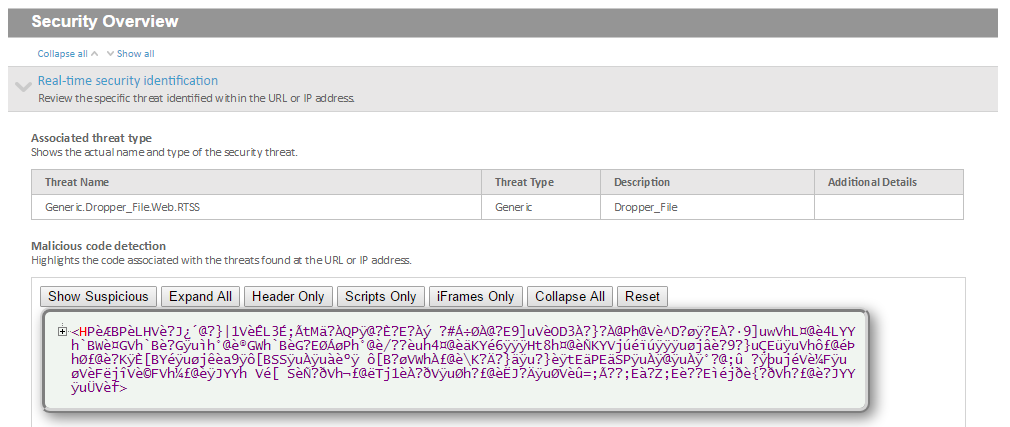
- Current MS Word Document making it's way around the Internet as of 1 hour ago and phoning home to Mother Russia per this Forcepoint Sandbox Report.

- As you'll note in the above report, the outbound call is detected in real-time by Forcepoint as a generic threat:


- What is the threat?  The Forcepoint ACE Engine identifies it as a Dropper File:


- What does Intel/McAfee think about the site?  It's a Shopping site with Minimal Risk from their perspective:


Need help in ripping out your McAfee solution for a true single pane of glass?  Connect w/ESPO Systems and request a free consultation. 

Thursday, July 7, 2016

Own Your Network Security?

Cisco has recently changed their Marketing to correspond with their change of leadership/CEO.  Lets test out their current "own your network security" mantra:

1. Microsoft Word documents are propagating across the Internet with malicious macros.  If your users have opened it, they would have seen this:


2. If your users enabled editing (the macro), unbeknownst to them, they would have initiated an outbound HTTP connection to this site in Germany:


3. Question - Would Cisco have enabled you to own your security... or been owned?  Based on what we see below, it looks like you are owned:


In summary, our work can be double checked via this Forcepoint File Sandbox Report.  If you agree with our conclusions, it's likely time to discuss how you can improve your Security Controls.  Learn more about our Forcepoint Services here.

Tuesday, June 14, 2016

To Russia with Love

Yes... we know it was "From Russia with Love", however, in this case it's a Post not a Get.  Say what?  Well... there is a malicious M$ Word document/macro that is on the loose currently.  As usual, the AV vendors are asleep at the wheel with only 2 of 57 solutions currently protecting our IT Assets:


Why are we so confident that McAfee and others are wrong?  This Forcepoint Sandbox Report proves that rather conclusively. 

OK, Ok, ok... why "To Russia..."?  Per below, the Dropper file performs an HTTP Post to a WWW site in Mother Russia.  This is an obvious outlier as most HTTP/S traffic is Get based rather than Post. 


Why would a Post occur rather than a Get?  Likely to send out your confidential information.  Question - do you have a Data Loss Prevention (DLP) solution monitoring those outbound Posts?  What if it was HTTPS vs HTTP?  Connect w/ESPO Systems for a free consultation.

Tuesday, May 31, 2016

Macro Malware on the Loose

Heads Up!  Another malicious MS Word file is on the loose with a very low detection rate.  Forcepoint File Sandbox Report here.

Note that only 3 of 57 Anti Virus Companies are properly detecting this malware:


Importantly, per below, note that a number of outbound HTTP Gets occur in which additional malware is downloaded:


Are you safe with old fashion URL Filtering?  Ummmm...nope.  Per below, this Russian Site is new (Uncategorized).  As such, you'll need a sophisticated anti-malware engine on your web proxy, ala Forcepoint's ACE Engine, to stop the 2nd stage of this attack:


Need more info about the Dridex Crew, who's targets have evolved from online banking credentials to this latest round of Locky Ransomware?  See the ESPO Systems Multimedia Portal here.

Wednesday, April 20, 2016

Symantec Misses on Dropper

A malicious Microsoft Word File w/associated macro is making its way across the Internet this morning.  How do we know?  Our Forcepoint Sandbox detected it... report here.

Unfortunately, and as is the case all too often, Symantec is not detecting this malware as proven by VirusTotal:


What makes us so certain that this file is indeed malicious?  Per below, it's pulling another file down via HTTP:


What does that prove you may ask?  Per below, that file is detected as another Dropper by our Forcepoint ACE Engine which is resident on our proxies:


In summary, AntiVirus is a commodity.  Do not buy into the pitch that it will solve your security problems.  Reduce your security spend on AV and insert Next Gen Security Solutions.  Call ESPO Systems for a free consultation/demonstration.

Tuesday, March 29, 2016

Control-as-a-Service (CaaS)

Anyone tired of hearing that the following architectures solve all the world's problems - SaaS, IaaS, Cloud?  Here's a novel concept, why don't we take "control" of our solutions, from a security perspective, and leave our fate in our own hands.  Case in point - MedStar Health:

- Per this Computerworld Article, MedStar was attacked over the weekend with the same ransomware that hit the Hollywood Presbyterian Medical Center in mid-February.  Per the report, the organization lost "control" of files and their system.  Does that sound like a potential HIPAA issue to you?

- Per this earlier ESPO Systems Blog, the Locky Ransomware is leveraging holes in our security controls.  To be precise, the malware authors know we dare not block Microsoft Attachments... even if they have malicious macros.  They also know AV Signatures are too slow to provide value.  As such, the only answer is Sandboxing... ala Forcepoint's Solution.

- So, you likely are asking, what does the MedStar Health Organization use to protect against these threats?  Well... they've bought into the Cloud Saves Everything dogma and have given "control" of their security to Google/Postini:


One final question, considering MedStar has given up "control" of their email security, is there much of a chance that outbound email is being monitored for PII or PHI?  It may be time to take back control of our security solutions.

Thursday, March 3, 2016

Comprehensive Threat Protection?

With the RSA Security Conference coming to a close, we suspect a lot of Security Pros are asking the same questions as us regarding all the dollars thrown at marketing, "really"?  That's not to say this intangible expense isn't needed.  If the products perform as advertised... we need to get-the-word-out.  However, when the marketing is nothing other than an attempt to obfuscate what is happening in the real word, as is the case currently with McAfee, it is our obligation to shed light on this.  Case in point:

McAfee is proclaiming to the world that they provide "Comprehensive Threat Protection"


However, as is often the case, malware is currently propagating across the internet via Microsoft Word Documents with Malicious Macros in which McAfee is not providing the protection their Mkting Dept claims.  Per below, only 3 of 55 AV Engines currently find a problem with this file:


Need further proof that the file is indeed malicious?  Note that files are dropped locally, processes are affected and outbound HTTP calls to Mother Russia are occurring:


In summary, and as is often stated on this blog, AV is a commodity.  Improve your security posture by implementing Next Gen Solutions with the cost savings found by reducing your spend on AV.

Friday, February 26, 2016

Malicious Excel File

Around 7:30amCST an Excel Spreadsheet w/macro began propagating across the Internet.  If you trust your security to the Anti Virus Vendors, you're likely sipping on a cup of coffee expecting to have an easy day heading into the weekend... as neither McAfee nor Symantec are currently detecting a problem:


However, per this Forcepoint File Sandbox Report, your day is about to change as this file is indeed malicious.  Per the report, it attempts to modify 21 Files, 2 Processes and 412 Registry Entries.  If that isn't bad enough, this Dropper File will also communicate to sites in Russia and Vietnam to pull down additional malware:


Additionally, if you've entrusted your Web Security to Cisco Ironport and are hoping the phone home to uggs-fashion.ru is blocked... you'll be disappointed.  Per below, the site name implies it's a fashion site, and, the Senderbase Reputation System unfortunately agrees:


In summary, security is moving far too fast to rely upon AV Signatures.  Contact ESPO Systems for a free consultation regarding how you can protect your IT Assets across the entire Kill Chain.

Thursday, February 18, 2016

Locky Ransomware on the Loose

It appears the Dridex Crew has expanded their Cyber Crime Portfolio from the stealing of login credentials to your favorite Financial Institution... to Ransomware.  Case in point:

- M$ Word Documents with malicious macros are being distributed via email attachments (sound familiar).

First Question - Will your users allow you to block all inbound Microsoft Word attachments?  Likely not...

Second Question - Are your spam prevention techniques 100% effective?  Ummm... no.

Third Question - Should we therefore feel confident that your Anti Virus Solution has your back and will detect the file at the gateway or desktop?  PLEASE!!!

- Thankfully, the Forcepoint File Sandboxing feature will detect this Ransomware.  On the other hand, if you are using an inferior solution, you are likely seeing Help Desk Tickets describe something looking like this:


- Anyone care to know the current AV Detection Rate?  Currently only 5 of 54 AV Engines are detecting the file properly.  How long do you think it will take before McAfee and Symantec get their act together?


In summary, this is the same crew who took down the Hollywood Presbyterian Medical Center over the weekend.  Do you wish to stay out of the news?  Need help from an organization who performed over 600 Security Projects in 2015??  Contact ESPO Systems here.